A daily verdict
Excellent to Poor, star-rated at a glance. Color-coded so you can read it across a parking lot in half a second.
Precise solunar predictions for hunters, anglers, and anyone who keeps an eye on the moon. Every calculation happens on your phone — no account, no signal, no subscription.
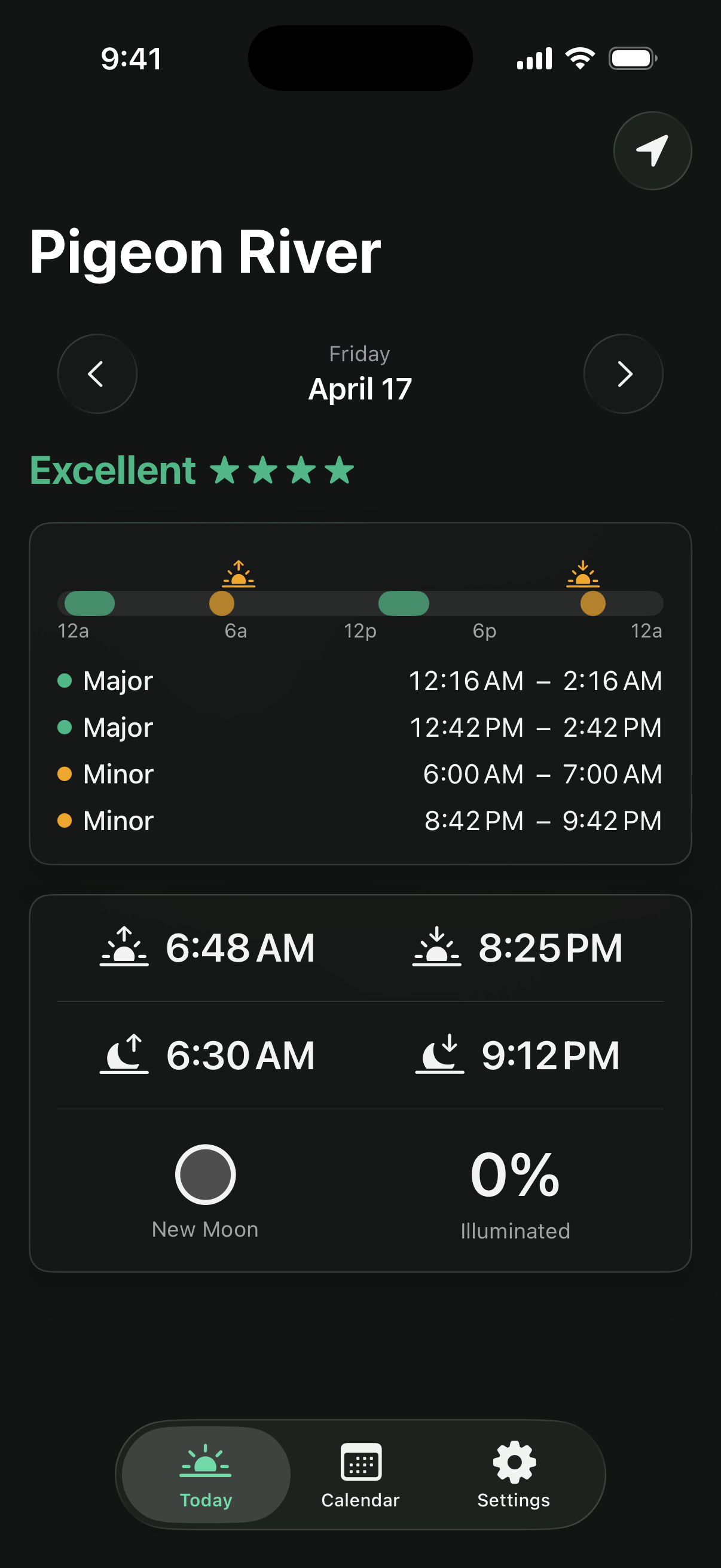
Excellent to Poor, star-rated at a glance. Color-coded so you can read it across a parking lot in half a second.
A pair of two-hour windows when the moon is overhead or underfoot. A pair of one-hour windows when it's rising or setting. Drawn on a 24-hour timeline.
A monthly grid with color-coded ratings and moon phases on every day. The best days this month surface on their own. Plan your time off around the moon, not the other way around.
Every calculation happens on your phone. Bush plane, blind, boat, or base camp — it just works. No signal required. Ever.
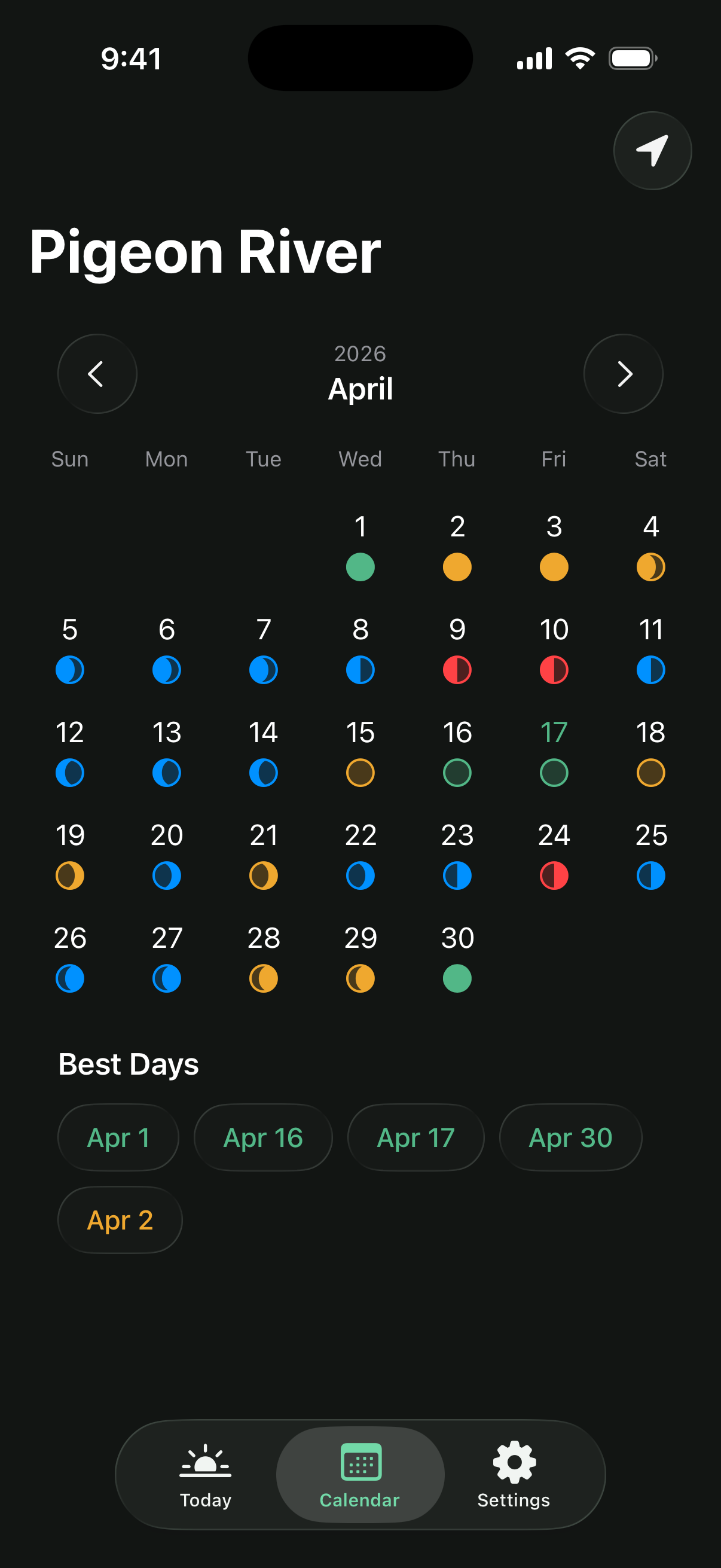
A full month at a glance — every day rated, every phase marked. You know which days are worth the early alarm before the month even starts. The strongest days of the month are listed below the grid. And since the moon's schedule is fixed, you can look as far ahead as you need to.
In 1926, a Florida outdoorsman named John Alden Knight noticed something every serious hunter and angler already half-knew: the fish bit harder, the deer moved more, and the birds flew on a clock the moon was winding.
He called it solunar theory. The moon pulls the tides — and the same force works on everything else that lives under it. When the moon is directly overhead or directly underfoot, animals feed. Fish strike. These are the major periods, roughly two hours each.
When the moon rises or sets, the effect is lighter but present. These are the minor periods, about an hour each. Four windows per day, advancing roughly fifty minutes each morning as the moon orbits ahead of the sun.
The strongest days fall near the new and full moon, when solar and lunar pull align. If a major period also coincides with sunrise or sunset, Knight considered that a red-letter day. Those dates are worth planning around.
"The time of day, not the day itself, determines whether sport will be good."
One honest price. No subscription, no tiers, no “pro” version. You pay for it, you own it. The way software used to work.
Your location never leaves your device.
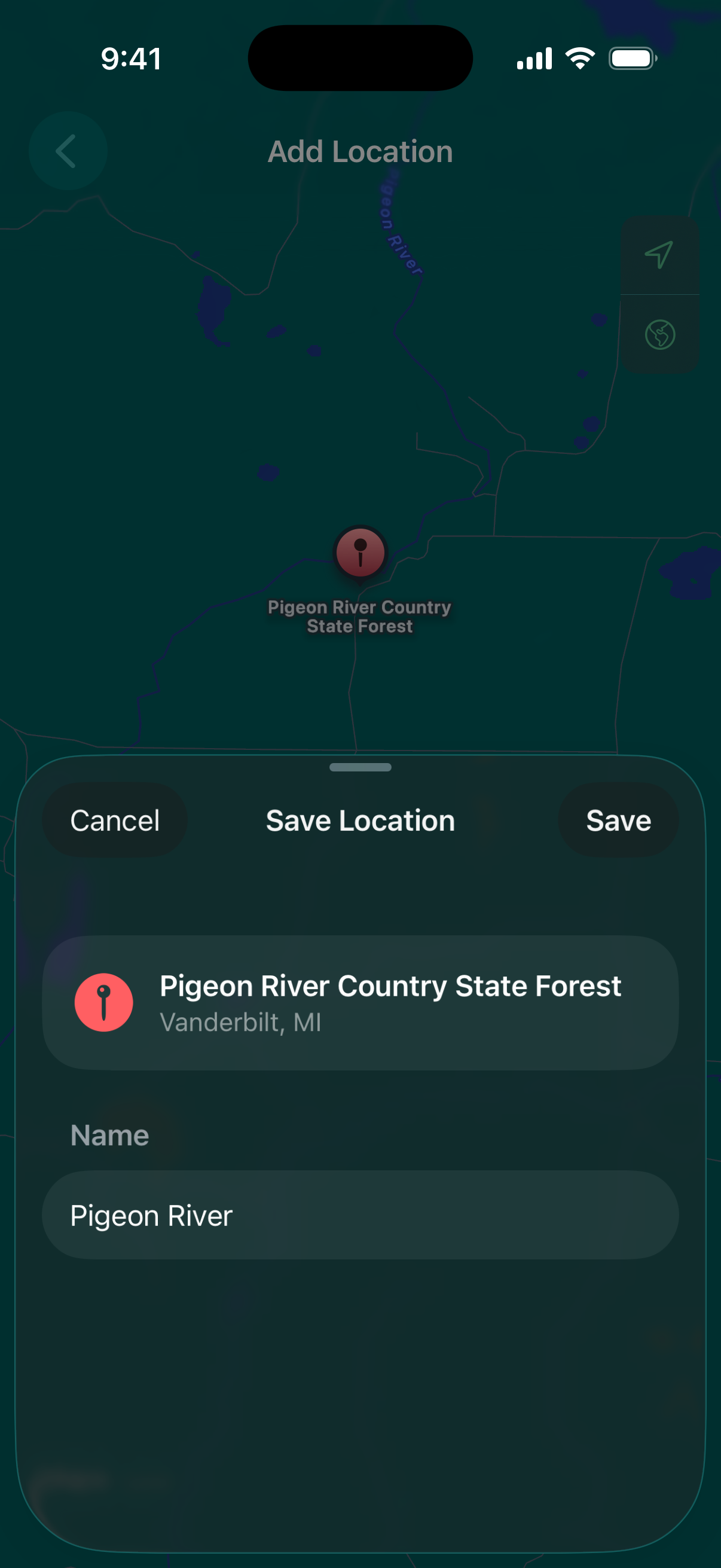
The app uses your location to compute the moon's position. Your location, your habits, and anything that could identify you is never collected or shared. No account required, ever.